At Walnut School, every policy is backed by scientific research. Our revolutionary No School Bag policy isn’t just convenient—it’s a health imperative supported by multiple international studies.
Influence of the Weight of a School Backpack on Spinal Curvature in the Sagittal Plane of Seven-Year- Old Children
1. Spine Health & Posture
2. Respiratory Function
1. Spine Health & Posture
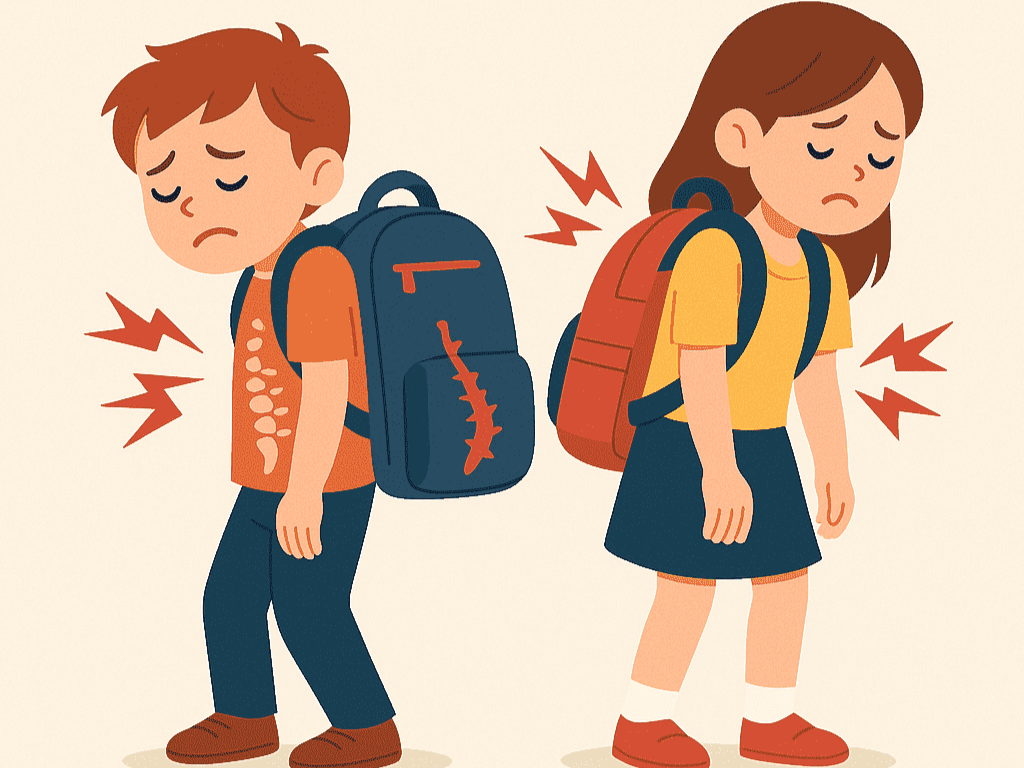
- Published in: BioMed Research International, 2015
- Researchers: Walicka-Cupryś et al., Medical University of Rzeszów, Poland
- Key Finding: 60% of seven-year-old children carry backpacks heavier than recommended weight
- Impact: Measurable changes in lumbar lordosis angle and sacral inclination
The study examined 109 children using the Zebris Ultrasonic System and found that heavier backpacks lead to:
- Reduced lumbar lordosis (natural lower back curve)
- Increased thoracic kyphosis (upper back rounding)
- Habitual forward lean posture that persists even after removing the backpack
2. Respiratory Function
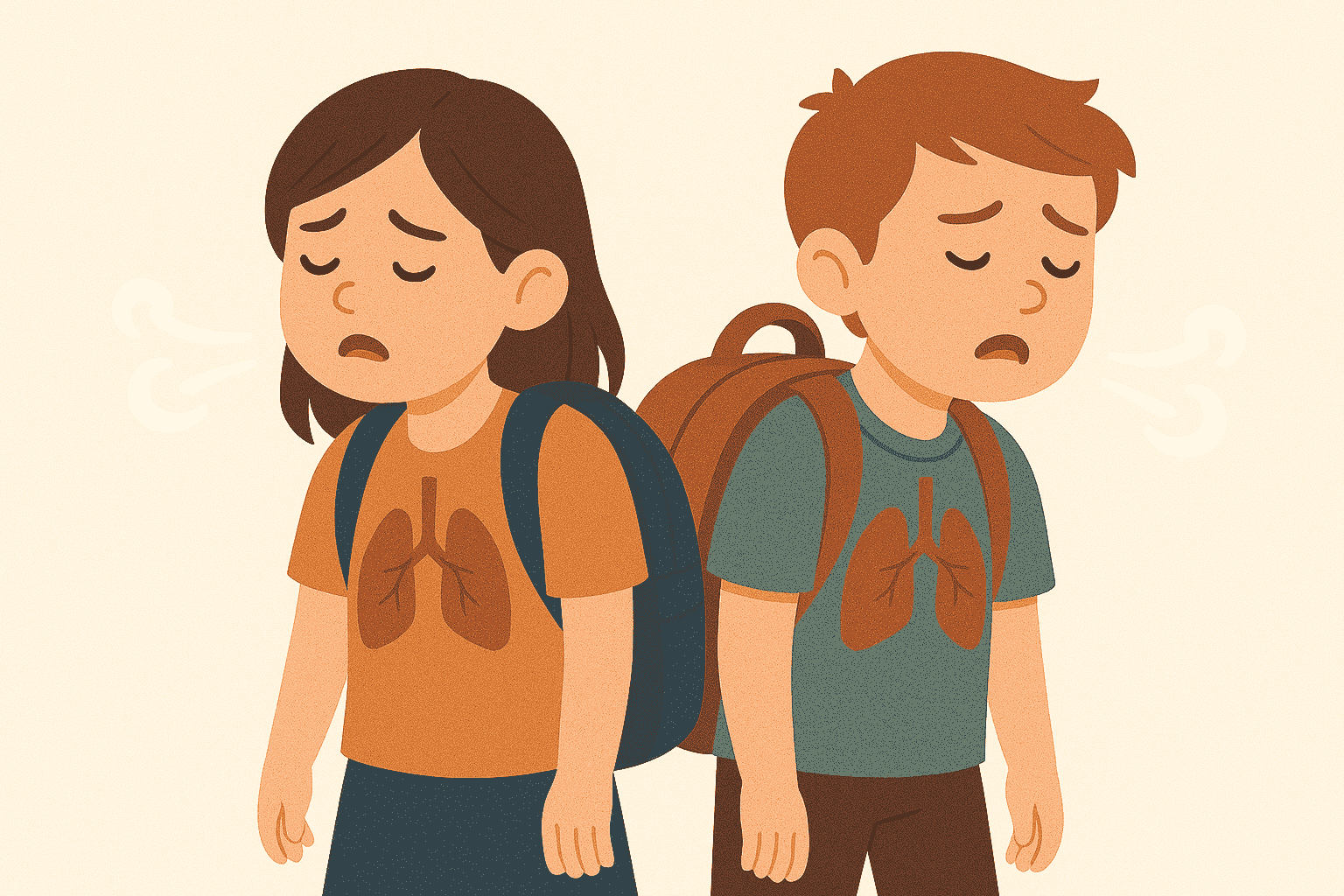
The Impact of Backpack Loads on School Children: A Critical Narrative Review
- Published in: International Journal of Environmental Research and Public Health, 2018
PMC6267109 - Key Finding: Mono-strap bags significantly reduce lung function parameters
- Impact: Decreased Forced Vital Capacity (FVC) and Forced Expiratory Volume (FEV1)
Research shows that:
- Backpacks exceeding 10% of body weight increase breathing rate
- Diagonal mono-strap bags restrict respiratory efforts
- Double-strap backpacks are preferable but still problematic when overloaded
- Children typically carry 10-25% of their body weight in school bag
3. Weight Recommendations
4. Long-term Health Implications
3. Weight Recommendations
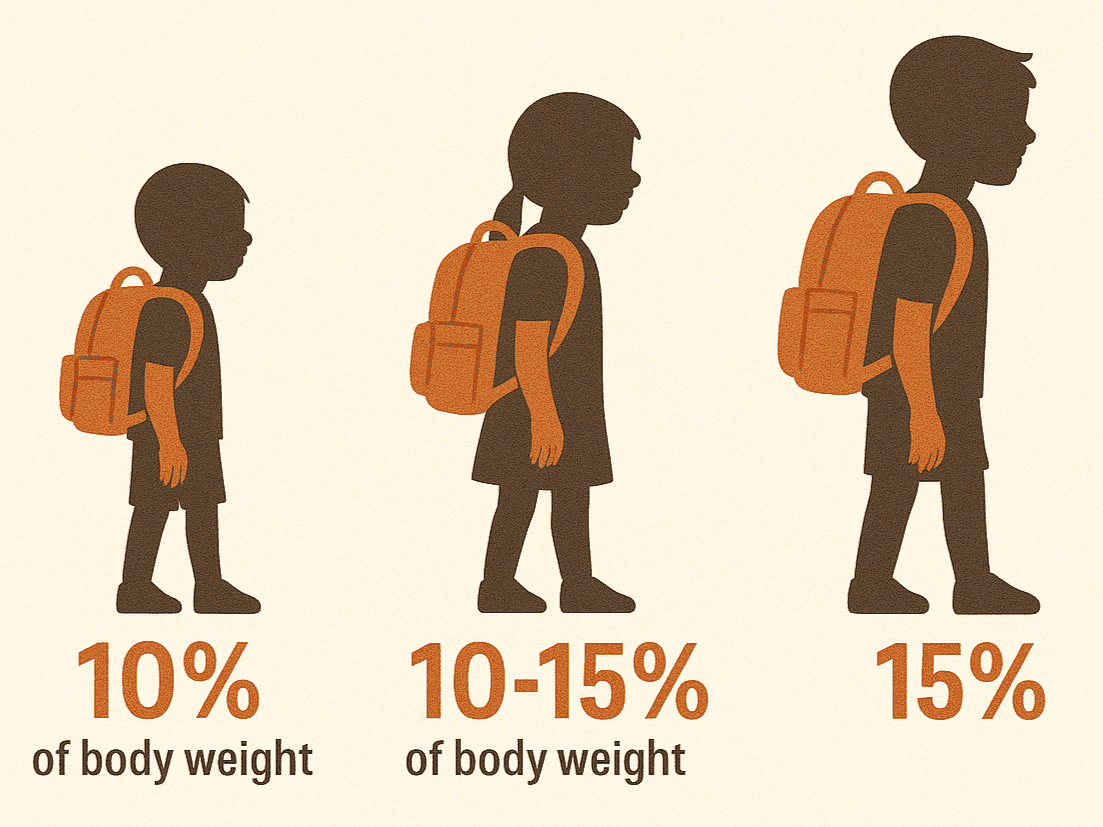
World Health Organization (WHO) Guidelines:
- Maximum recommended backpack weight: 10% of child’s body weight
- Average 7-year-old weight: 23 kg
- Maximum safe backpack weight: 2.3 kg
- Reality: Most children carry 4-6 kg daily
American Academy of Pediatrics (AAP) Recommendations:
- Backpack weight should not exceed 10-15% of body weight
- Both shoulder straps should always be used
- Wide, padded straps are essential
- Backpack should not hang more than 4 inches below waistline
4. Long-term Health Implications
Research from Indian Journal of Pediatrics (2016): “School Bag Weight and Musculoskeletal Symptoms among children“
- 27% of students reported back pain
- 19.9% reported shoulder pain
- 15.8% reported neck pain
- Direct correlation between bag weight and pain incidence
The Walnut Solution
- Zero weight carried between home and school (except light folder)
stress - 100% elimination of backpack-related spine
- Natural posture maintained throughout the day
- Unrestricted breathing without strap compression
- Energy conservation for learning instead of carrying
- Daily carrying of 4-6 kg bags
- Compression of chest and shoulders from straps
- Forward lean compensation for heavy loads
- Uneven weight distribution from single-strap carrying
- Chronic musculoskeletal stress
Comparative Analysis
| Factor | Traditional School | Walnut School |
| Daily carry weight | 4-6 kg (15-25% body weight) | <250g (<1% body weight) |
| Spine stress | High – documented curvature changes | None – no bag to carry |
| Breathing restriction | Documented FVC reduction | Full respiratory capacity |
| Energy expenditure | Significant for carrying | Minimal – just a light folder |
| Posture impact | Forward lean, rounded shoulders | Natural, upright posture |
| Long-term risk | Chronic back/neck pain | Healthy spine development |
Parent Testimonials
My son’s pediatrician noticed improved posture within 3 months of joining Walnut. She asked what we’d changed!
As an orthopedic surgeon, I’m shocked more schools haven’t adopted this. It’s basic biomechanics.
My daughter used to complain of shoulder pain. It disappeared completely after switching to Walnut.
Medical Professional Endorsements
Dr. Vinod Karkare, MS Orthopaedics Shree Hospital, Mumbai “The no-bag policy at Walnut School represents preventive healthcare at its best. We see numerous cases of early-onset back problems in children, almost all related to
heavy school bags.”
Dr. Apoorva Kulkarni Professor of Physiotherapy “Movement between classes, as practiced at Walnut, combined with no bag weight, creates optimal conditions for healthy spine development during crucial growth years.”
Frequently Asked Questions
How does Walnut manage without students carrying books?
A: We maintain double sets of textbooks—one for
home reference, one for school use. Daily worksheets replace heavy notebooks.
What about homework materials?
A: Students carry only the day’s worksheet in a light folder. Everything else stays at school or home.
Is this system proven?
A: Yes, we’ve successfully implemented this for 10+ years with 3,247+ families, with zero reported cases of backpack-related health issues.
Take Action for Your Child’s Health
Every day your child carries a heavy bag is another day of:
- Unnecessary spine stress during crucial growth years
- Restricted breathing from strap compression
- Energy wasted on carrying instead of learning
- Risk of developing chronic musculoskeletal problems
The solution exists. It’s proven. It’s at Walnut School.
References
1. “Influence of the Weight of a School Backpack on Spinal Curvature in the Sagittal Plane of Seven-Year-Old Children”
-
Authors: Walicka-Cupryś, K., et al.
-
Published in: BioMed Research International, 2015, Article ID 817913
-
DOI Link: https://doi.org/10.1155/2015/817913
2 . “The Impact of Backpack Loads on School Children: A Critical Narrative Review”
-
Authors: Perrone, M., et al.
-
Published in: International Journal of Environmental Research and Public Health, 2018, 15(11), 2529
-
(PMC6267109): https://www.ncbi.nlm.nih.gov/pmc/articles/PMC6267109/
3. “School Bag Weight and Musculoskeletal Symptoms among Children”
-
Authors: Mwaka, E.S., et al.
-
Published in: Indian Journal of Pediatrics, 2016, 83(1), 34-39
4. School Health and Youth Health Promotion
- Publisher: World Health Organization (WHO), Geneva: WHO Press, 2009
5. “Backpack Safety” – AAP Policy Statement on School Health
- Publisher: American Academy of Pediatrics (AAP), 2018