Baby Walnut assessments are designed to feel like normal, everyday activities. Children don’t even realize they’re being tested, creating a stress-free evaluation experience for both students and parents.
Two Assessment Formats
Written Exams
Oral Assessments
Written Exams

- Based on topics covered through WRITE (English and Math skills).
- Conducted like regular worksheets under teacher supervision.
- No exam pressure—children perceive them as routine classroom activities.
- Nursery exception: No written exams for Unit 1 as they’re just learning to write.
Oral Assessments
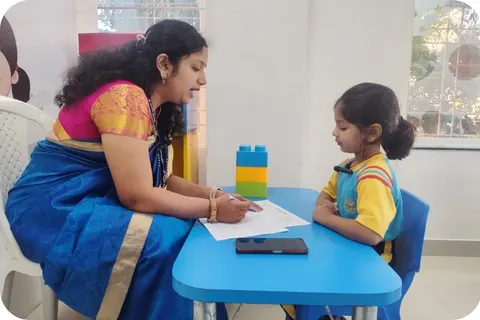
- Based on READ and LEARN subjects (MY WORLD, Numeracy, Concepts).
- Conducted throughout the unit in natural conversation format.
- Shlokas and poems not included—focus on academic concept understanding.
- Individual assessment ensuring genuine comprehension.
Comprehensive Preparation System: Practice Test Support
Comprehensive Preparation System: Practice Test Support
Two practice tests each for English and Math skills.
First practice test: Checked by teacher, returned Friday before exams.
- Teacher analysis: Identifies concepts needing revision before actual exam.
Second practice test: Optional home practice with exam-pattern questions.
- Image-rich format: Parents don’t need to create questions—we provide everything.

Exams are not a big deal
Holistic Development Tracking
Exams are not a big deal
- All worksheets available for concept revision, sent in advance.
- WalSH app has ebooks shared for subject review.
- Clear guidance eliminating parent guesswork about preparation.
- Assessment shows learning progression, just star ratings, no “marks”.
Holistic Development Tracking
Comprehensive Report Cards
- Academic performance across all subjects.
- Teacher observations on behaviour and social interactions.
- Holistic view of child’s development over the quarter.
- Individual growth patterns and personality insights.
- Social skills development and peer interaction analysis.
The Baby Walnut Promise
Our evaluation philosophy: Children stay cool, parents stay calm. We’ll tell you when you need to worry (spoiler: it’s not now). This phase should be enjoyed, not stressed about.
Assessments that build confidence rather than anxiety, measure understanding rather than memorization, and celebrate growth rather than create pressure.
Because evaluation should illuminate learning, not intimidate learners.