What is Computational Thinking?
Computational thinking develops the foundational skills of computer science: discrete modeling, algorithms, programming, and logical problem-solving. Students learn to understand complex problems, break them down systematically, and create step-by-step solutions.
Why computational thinking is essential?
How we teach it?
Why computational thinking is essential?
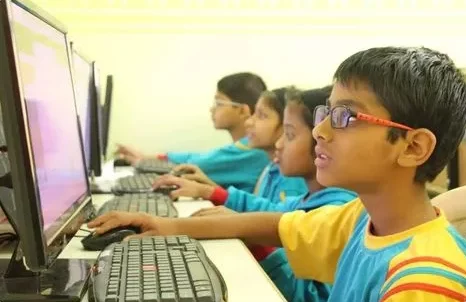
- National Education Policy requirement – Computer science is now a core subject in India’s new education framework.
- Future career preparation – Essential for success in an increasingly digital world.
- Universal problem-solving skills – This thinking approach helps in any subject or task students undertake.
- AI-ready minds – Develops the logical thinking patterns needed for tomorrow’s technology.
How we teach it?
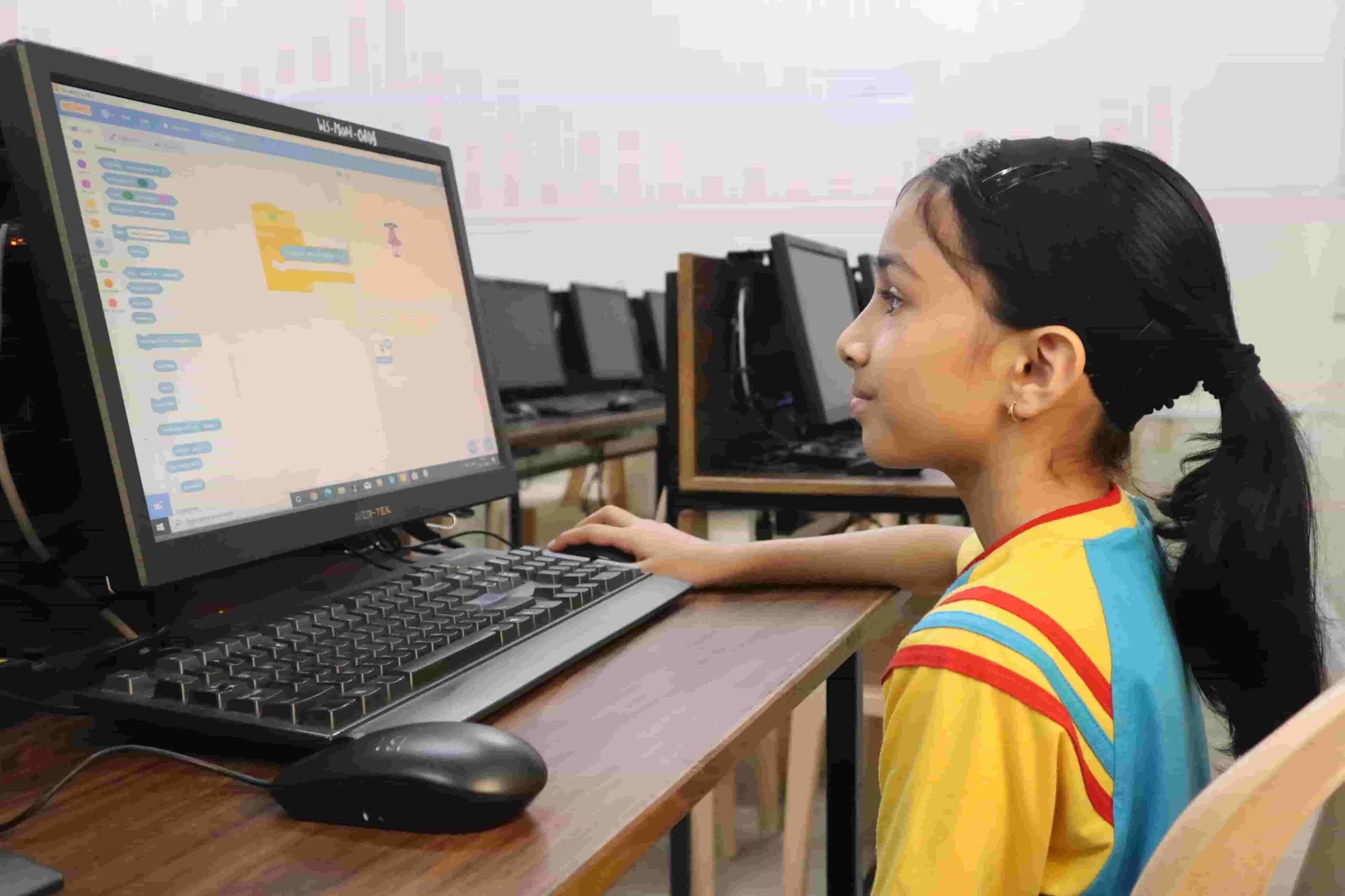
Two classes per week, Std 1-10 – Serious commitment to developing these crucial skills
Progressive Learning Journey:
- Early grades: Identifying similarities, differences, and pattern recognition.
- Middle grades: Data analysis and basic algorithmic thinking.
- Advanced levels: Scratch programming language (MIT-developed graphical programming).
- All levels: Problem statement analysis, logical breakdown, and solution development.
Our Expertise
Nikhil Karkare, our Director, is a founding member of CSPathshala – India’s open-source computational thinking curriculum used by students across the country. This expertise directly benefits our students.
Programming Competition Success
The Walnut computational advantage
Programming Competition Success
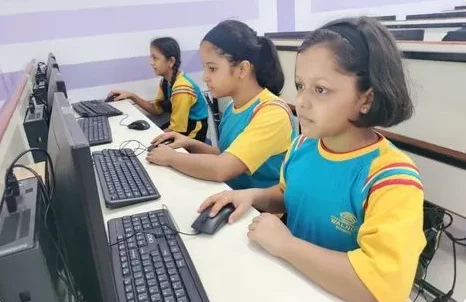
- Multiple wins in inter-school Scratch programming competitions.
- Victories in Bebras International Computational Thinking Challenge (conducted in 60+ countries).
- Regular participation in hackathons and programming contests.
The Walnut computational advantage
- Early start advantage – Building these skills from Grade 1 while others start much later.
- Expert-designed curriculum – Direct access to CSPathshala founder’s expertise.
- Competition-proven results – Students regularly outperform peers from other schools.
- Cross-curricular benefits – Computational thinking enhances performance in math, science, and logical reasoning.
- Real programming experience – Not just theory, but actual coding and problem-solving.
Beyond computer literacy
This isn’t about learning mouse and keyboard skills – it’s about developing a systematic approach to problem-solving that will serve students throughout their lives, whether they pursue technology careers or not.
Preparing for the future
In a world where computational thinking is becoming as fundamental as reading and writing, Walnut students graduate with a significant advantage – the ability to think algorithmically, solve problems systematically, and adapt to technological change with confidence.
Because tomorrow’s leaders will be those who can think computationally today.
General knowledge program
Understanding the world through observation and curiosity
Beyond traditional general knowledge
We don’t teach countries-capitals-flags-currencies memorization. Instead, students explore the fascinating world of everyday objects and phenomena they encounter daily but never truly understand. One class per week for Std. 1 to 4 is dedicated to developing deep curiosity about the world around them.
The endless scope of investigation
Students explore everything around them – from technology glitches to human biology, urban planning to brand psychology, economic systems to natural phenomena. The range spans whatever captures their curiosity about daily life.
Sample investigations
Recent student explorations have included network congestion, currency security features, wound healing, architectural design choices and marketing psychology – but these represent just a tiny fraction of the countless topics students investigate throughout the program.
Diverse domains explored
Technology systems, human sciences, social structures, economic principles, design psychology, natural processes, communication networks, safety systems – essentially any aspect of the world students encounter becomes fair game for investigation.
The observation advantage
This program develops a crucial life skill – the habit of observing closely and asking deeper questions about ordinary things. Students become naturally curious about their environment rather than passively accepting what they see.
Real-world connections
Knowledge isn’t isolated facts but interconnected understanding. Students learn to connect classroom concepts to daily experiences, making all learning more meaningful and memorable.
Developing critical thinkers
Instead of memorizing disconnected facts, students develop analytical minds that can understand complex systems, question assumptions and make informed observations about their world.
The scope is limitless
From technology to biology, economics to architecture, social systems to natural phenomena – if it exists in a student’s world, it becomes a subject for exploration and understanding.
The Walnut difference
While other schools focus on traditional rote learning, we’re building students who can analyze and understand the countless systems, objects, and phenomena that surround them daily.
Because true intelligence isn’t knowing random facts – it’s understanding the world you live in.